
Why AI Music is Changing Everything for Independent Artists

Being an independent artist has always meant wearing too many hats. You’re the songwriter, the musician, the producer, the mixing engineer, the visual designer, the social media manager, and the label executive — all at once, all for free. AI music technology is changing that equation dramatically.

The Old Gatekeepers

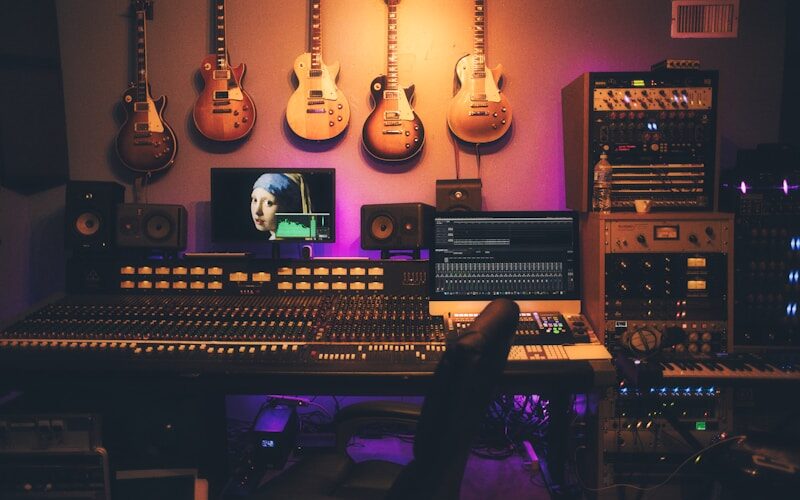
For most of music history, producing quality music required access to expensive resources: studio time, session musicians, professional equipment, and the technical knowledge to use it all. These barriers kept the playing field heavily tilted toward artists signed to major labels. The home recording revolution of the 2000s began dismantling these barriers, but even then, the gap between a bedroom recording and a professional release remained vast for most artists.

AI as the Great Equaliser

AI music tools are the next leap. Consider what’s now accessible to any independent artist with a laptop and an idea:

  • Professional-quality backing tracks generated in minutes, not months
  • Realistic virtual instruments that match expensive session recordings
  • Instant arrangement assistance for artists who compose but don’t produce
  • Mastering and mixing tools that achieve broadcast-ready quality automatically
  • Unlimited sonic experimentation without the cost of studio time

The result is that an independent artist today can produce music that competes sonically with major label releases — not because they’ve compromised, but because the tools have caught up with their ambition.

Breaking the Creative Block

Every artist knows creative block. The blank screen, the chord progression that goes nowhere, the melody that feels derivative. AI music tools have become powerful antidotes to this paralysis. Generating ten different chord progressions in a minute, then selecting the one that sparks something — that’s a creative workflow that didn’t exist five years ago.

Artists describe AI music tools less as replacement and more as a conversation partner. You bring the ideas, the taste, the direction; the AI brings an inexhaustible willingness to generate options. Together, the creative output multiplies.

New Models, New Money

AI is also opening new revenue streams for independent artists. Stock music libraries are now accessible to anyone who can produce quality AI-assisted music. Sync licensing for ads, games, and content creators has exploded as the demand for fresh music vastly outpaces human supply. Some artists are exploring vocal style licensing — allowing their artistic DNA to be licensed to AI tools for a fee, creating passive income from their creative identity.

The Authenticity Question

The most common concern: does using AI make your music less authentic? Consider the precedent. Using a drum machine instead of a live drummer was once controversial. Using samples was once a legal minefield. Auto-Tune was once considered cheating. Each became a normal part of the creative toolkit.

What makes music authentic isn’t the tools — it’s the intention, the emotion, and the perspective behind it. Your creative voice — what you select, how you arrange it, what story you’re telling — remains entirely your own. AI is just the most powerful brush the artistic palette has ever seen.

Getting Started with PinkDux

If you’re an independent artist curious about what AI music can do for your creative process, PinkDux is built with you in mind. Simple, powerful, and designed for real creative work — not just novelty. Your music deserves to be heard. We’re here to help you make it.

From Jazz to Hyperpop: The Genres AI Music Does Best

AI music generation doesn’t treat all genres equally. Like a musician who spent years practising certain styles, AI models have strengths and weaknesses shaped by their training data. Understanding which genres AI handles brilliantly — and where it still struggles — helps you work with these tools more effectively.

Where AI Music Excels

Electronic and Dance Music

Electronic music is arguably AI’s strongest domain. Dance music is built on patterns — four-on-the-floor rhythms, chord progressions that cycle in four-bar loops, synth textures that layer predictably. Want a hypnotic minimal techno loop? A euphoric progressive house build? A dark industrial beat? These requests play directly to AI’s pattern-recognition strengths, with results often indistinguishable from human-made tracks.

Lo-Fi and Chill Music

Lo-fi hip-hop, study beats, ambient chill — these genres have become AI music gold standards. Their characteristic features (slightly detuned samples, warm vinyl crackle, mellow chord voicings) are well-represented in training data and relatively simple to reproduce. Many AI-generated lo-fi tracks are genuinely excellent for studying, relaxing, and background listening.

Orchestral and Cinematic Scores

Film-score-style orchestral music is another AI strength. The rules of classical orchestration are well-documented in training data. AI can produce convincing epic cinematic pieces, delicate string arrangements, and dramatic brass fanfares. For indie game developers, podcast creators, and content producers, AI orchestral music is a genuine game-changer.

Pop Production

Contemporary pop follows relatively predictable structures — verse, pre-chorus, chorus, bridge — with production conventions that change by era. AI has absorbed an enormous amount of pop music and can produce convincing backing tracks, chord progressions, and vocal melodies across different sub-genres from bubblegum to dark pop.

Where AI Still Struggles

Jazz and Improvisation

Jazz is one of AI’s trickiest challenges. Real jazz feels alive because it’s reactive — musicians respond to each other in real time, making micro-decisions based on human intuition. AI can generate jazz-sounding music, but it often misses the conversational quality, the unexpected phrases, the moments of genuine discovery that make great jazz transcendent.

Deeply Culturally Specific Music

Music deeply embedded in specific cultural contexts — regional folk traditions, world music with complex microtonal structures — is often underrepresented in training data, leading to stereotyped outputs. AI tends to produce a globalised version of these styles rather than capturing their authentic character.

Long-Form Coherent Compositions

Generating a 30-second loop? Easy. Generating a 10-minute symphony with genuine thematic development and structural logic? Still very hard. Most AI models struggle with long-range coherence — maintaining a musical idea over an extended duration without becoming repetitive.

The Trajectory

The gap between what AI does well and what it struggles with is closing rapidly. Models trained on larger, more diverse datasets are making inroads into jazz, world music, and long-form composition. Today’s limitations are tomorrow’s solved problems.

At PinkDux, we keep our fingers on the pulse of these developments, constantly updating our platform to harness the latest breakthroughs. Whatever genre you’re working in, we’re here to push the boundaries of what’s possible.

10 Tips for Getting the Best Results from AI Music Tools

AI music generation has come an enormous distance in the past few years, but the quality of what you get out depends heavily on what you put in. After extensive experimentation, we’ve compiled ten effective strategies for getting genuinely great results from AI music tools.

1. Be Specific With Your Prompts

Vague prompts produce vague music. Instead of “make something cool,” try “upbeat funk with slap bass, vintage 1970s feel, brass stabs, tempo around 100 BPM.” The more specific you are about genre, instruments, era, mood, and tempo, the more targeted your output will be.

2. Reference Real Artists and Songs

Most AI music tools respond well to references. “In the style of Jon Hopkins” or “like Daft Punk’s Discovery album” gives the model enormous information about texture, energy, and production aesthetic. Stack multiple references: “the groove of J Dilla with the textures of Arca.”

3. Use Structural Keywords

Tell the AI where you are in the song. “Building intro,” “main chorus with full arrangement,” “stripped-back bridge,” “big energetic drop” — these structural cues help the AI generate appropriate sections for each part of your track.

4. Iterate and Refine

Rarely is the first output perfect. Treat your initial generation as a rough draft. Take what works, identify what doesn’t, and refine your prompt accordingly. Often the third or fourth iteration is where the magic appears.

5. Use Reference Audio When Available

Many advanced tools allow you to upload a reference track. This is enormously powerful — rather than describing a sound in words, you can show it. Use royalty-free music or your own recordings as references to steer the generation.

6. Layer Multiple Generations

Professional tracks are built in layers. Use AI to generate individual elements separately — drums, bass, chords, melody — then combine them in a DAW. This gives you far more control over the final mix.

7. Understand the Tool’s Sweet Spots

Different AI music tools have different strengths. Some excel at electronic music, others at orchestral composition. Spend time exploring what your chosen tool does best and lean into those strengths.

8. Embrace Unexpected Results

Some of the best creative discoveries come from AI outputs that weren’t what you asked for. When the AI produces something unexpected, don’t immediately discard it. Ask: “Is there something here I wouldn’t have created myself?”

9. Keep Mood Descriptors Vivid

Emotional language translates surprisingly well into musical direction. “Melancholic but hopeful,” “chaotic and joyful,” “lonely midnight drive” — these vivid mood descriptors activate associations the purely technical language sometimes misses.

10. Post-Process and Edit

AI music is a starting point. Import your AI-generated music into a DAW, apply EQ and compression, add effects, trim and arrange sections. The best AI-assisted music combines machine generation with human editorial judgment.

The Creative Partnership

Think of AI music tools as a remarkably talented but slightly literal-minded collaborator. They respond to clear direction, flourish with creative constraints, and occasionally surprise you with genuine brilliance. Master the communication, and you’ll be making music you’re genuinely proud of.

The Future of Music is AI-Assisted: 7 Trends Shaping Tomorrow’s Sound

The music industry has been transformed many times before — by recorded sound, by the electric guitar, by the drum machine, by the DAW. Each disruption triggered panic, then adaptation, then an explosion of new art. AI music generation is the next wave, and it’s arriving faster than anyone expected.

Here are seven trends reshaping music as we know it.

1. Personalised Soundscapes on Demand

Imagine a streaming platform that doesn’t just recommend music — it generates it specifically for you, right now, matching your mood, location, activity, and even biometric data from your wearables. This is already being prototyped. AI will make music truly personal, moving from “for audiences like you” to “for you, right this moment.”

2. AI as Co-Writer, Not Replacement

The narrative of “AI replacing musicians” misses the more exciting reality. Professional artists are increasingly using AI as a creative partner — generating chord progressions to break creative blocks, creating demo tracks to present to labels, or producing backing music for independent releases. The songwriter of 2030 will look more like a creative director than a solo craftsperson.

3. Real-Time Adaptive Game and Film Music

Dynamic music that adapts to gameplay has existed for decades, but the limitations were enormous — composers had to pre-write every variation. AI removes this constraint entirely. Future game soundtracks will be generated in real time, responding to every player action. The same applies to immersive film experiences and virtual reality.

4. Democratisation of Music Production

Making professional-quality music once required thousands of pounds in equipment and years of technical training. AI music tools are collapsing those barriers. Teenagers in bedroom studios can now produce tracks that compete sonically with major label releases — amplifying voices that were previously priced out of the market.

5. New Revenue Models for Artists

As streaming revenue remains fractional, forward-thinking artists are exploring AI-powered revenue streams: licensing their vocal style or artistic DNA to AI systems, selling personalised AI-generated music, or offering subscription services for custom AI music trained on their aesthetic. The old model is broken; artists who embrace AI are building new ones.

6. The Rise of AI Music Genres

History shows that new technology creates new genres. Synthesisers created electronic music. AI will create genres we haven’t imagined yet — forms that exploit AI’s unique capabilities: seamless transitions between styles, music composed in multiple genres simultaneously, audio that shifts based on listener interaction. The next great genre is being born in a latent space right now.

7. Ethical Frameworks and New Creative Rights

The next decade will see intense negotiation around AI music. Who owns a song written by AI? How do we compensate artists whose work trained these models? These questions don’t have easy answers, but they’re being asked loudly, and the frameworks that emerge will define the creative economy for generations.

The Bottom Line

The future of music isn’t AI versus humans. It’s AI with humans — a fusion that amplifies human creativity. At PinkDux, we’re building tools that put the creative power squarely in your hands. The future sounds exciting. Let’s make it together.

How AI Music Generation Actually Works: The Magic Behind the Melody

If you’ve ever asked an AI to write you a song and received something surprisingly listenable, you’ve witnessed one of the most fascinating intersections of art and technology in human history. But how does it actually work? What’s happening beneath the surface when you type “give me an upbeat lo-fi hip-hop beat” and receive a fully produced track minutes later?

The Building Blocks: Training Data

Every AI music system starts with data — enormous amounts of it. We’re talking about millions of songs, audio files, sheet music, MIDI sequences, and metadata spanning every genre imaginable. This data is fed into neural networks that learn patterns: the way chords progress in jazz, how a four-on-the-floor kick drum defines house music, why a minor seventh chord feels melancholic.

The AI doesn’t “listen” the way you do. It processes audio as numerical representations — waveforms converted into spectrograms, MIDI files broken into sequences of pitch and duration values. These numbers reveal patterns the model learns to replicate and extend.

Transformers: The Architecture That Changed Everything

The same Transformer architecture that powers large language models like GPT also revolutionised AI music. Models like Google’s MusicLM and Meta’s MusicGen use Transformers to predict what musical tokens should come next, much like predicting the next word in a sentence.

A musical token might represent a specific note, chord, rhythm, or even a small audio snippet. By learning billions of these token sequences, the model understands musical grammar — not as a set of rigid rules, but as probabilistic patterns derived from real human creativity.

Conditioning: Telling the AI What You Want

Here’s where the real magic happens. Modern AI music systems accept “conditioning” inputs — text prompts, reference audio, MIDI sketches, or even mood tags. When you say “upbeat summer pop with acoustic guitar,” the model uses a text encoder to translate your words into a mathematical representation that steers the generation process.

This conditioning vector acts like a compass, nudging the AI toward certain sonic territories while still allowing for creative variation. That’s why two prompts with slightly different words can produce very different music — the conditioning space is rich and nuanced.

Diffusion vs. Autoregressive Models

There are two main approaches to generating music. Autoregressive models generate music token by token, each new element influenced by everything that came before — good for coherence but slow. Diffusion models start with random noise and gradually refine it into music through repeated denoising steps — faster and capable of generating whole sections at once.

Many modern systems combine both approaches, using autoregressive methods for high-level structure and diffusion for fine-grained audio details. The result is music that sounds both structured and spontaneous — like a real musician improvising within a composed framework.

Why It Sounds So Good Now

Early AI music was recognisable as artificial — a bit repetitive, tonally odd, missing the human “feel.” The leaps in quality since then come from three things: vastly larger training datasets, better model architectures, and improved audio synthesis using neural vocoders. In blind tests today, many listeners can no longer reliably distinguish AI-generated music from human-made tracks.

What This Means for You

Understanding how AI music works helps you use these tools more effectively. The more specific your prompts, the better your results. Combine text descriptions with reference audio. Experiment with different models for different genres. And remember — you’re the creative director. The AI is your orchestra.

At PinkDux, we’re harnessing exactly this technology to help you create incredible music, no instrument required. The beat is just one prompt away.